How to grow maize in Ghana
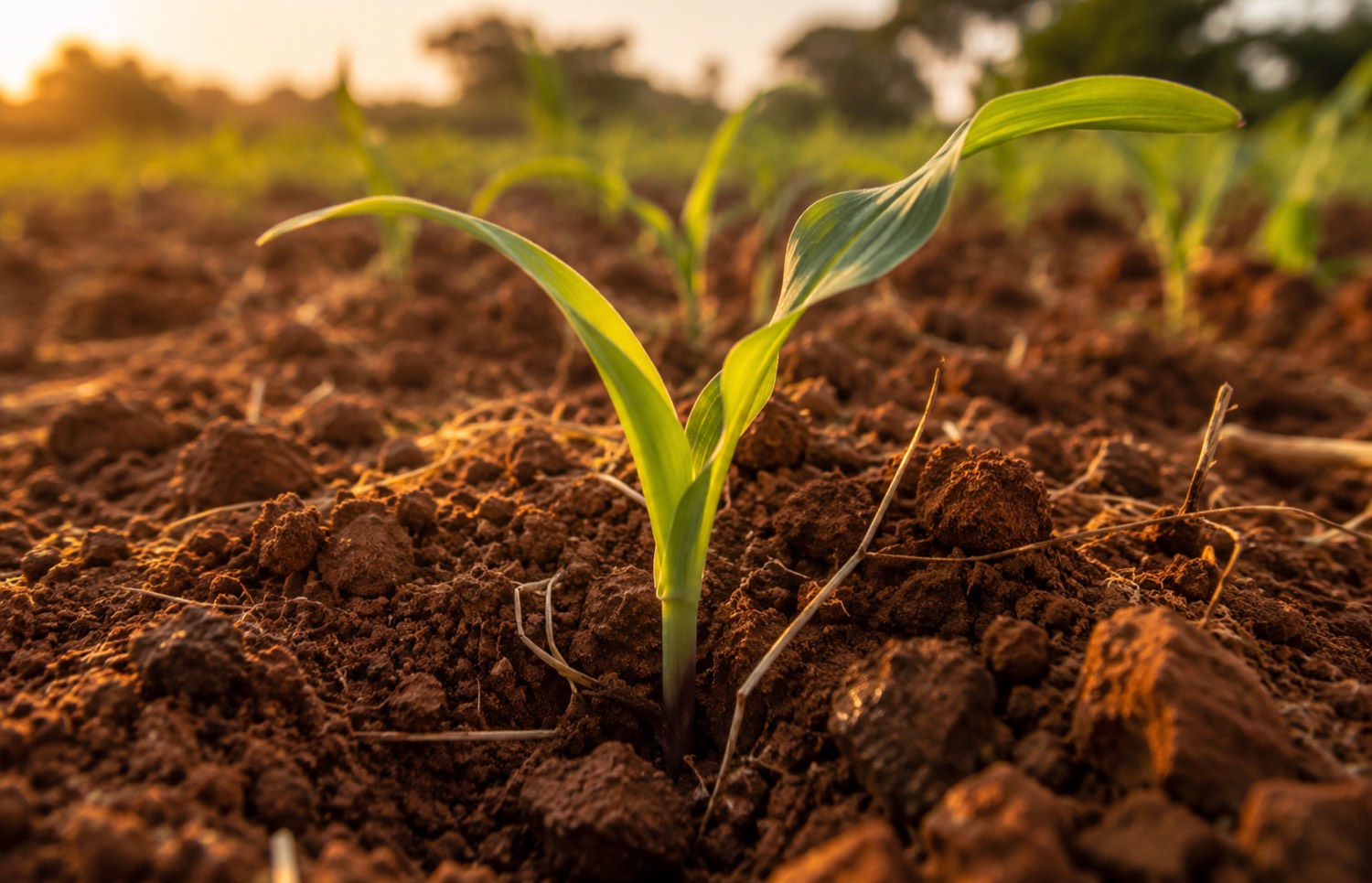
A primary staple across Ghana, grown heavily in the Forest-Savannah Transition zone (Techiman, Ejura) and the Northern Savannahs.
Soil
Deep, well-drained loamy to sandy-loamy soils rich in organic matter. Does not tolerate waterlogging.
Target pH 5.5–7
Preparing the land
Slash and clear debris. Gentle ploughing (hoeing) and harrowing are recommended to loosen the soil.
Varieties
- Obatanpa
- Quality Protein Maize (QPM); highly popular.
- Omankwa
- Early maturing, drought-tolerant.
- Honampa
- QPM hybrid.
- Sanzal-sima
- Striga-tolerant; popular in the North.
- Abontem
- Extra-early yellow maize.
When and how to plant
- Major Season (South)
- Late March to mid-April
- Minor Season (South)
- Late August to early September
- Northern Ghana (single season)
- Late May to June, following the establishment of steady rains
75 cm × 40 cm (2–3 seeds per hole)
Fertilizer
NPK 15-15-15 or NPK 20-10-10 for basal application; Urea or Ammonium Sulphate for top-dressing.
- Basal · 1–2 weeks after planting
- 3–4 bags of NPK per hectare (≈120–160 kg/ha)
- Top-dressing · 4–6 weeks after planting (around knee-high stage)
- 2 bags of Urea per hectare (≈100 kg/ha)
Pests
- Fall Armyworm (FAW)
- The most destructive pest. Control with systemic insecticides (e.g. Emamectin benzoate, alternating active ingredients to prevent resistance) applied early morning or evening.
- Stem borers
- Managed similarly to Fall Armyworm.
Diseases
- Maize streak virus
- Transmitted by leafhoppers. Control via resistant varieties (like Obatanpa) and clean farm hygiene.
- Maize rust
- Control via resistant varieties and clean farm hygiene.
- Smut
- Control via resistant varieties and clean farm hygiene.
Harvest and storage
Harvest when the husks turn brown and dry and the black layer forms at the base of the grain kernels. For dry grain, moisture should drop significantly before pulling ears.
Dry grains thoroughly to a safe moisture content of 12–13%. Store in ventilated cribs, polypropylene sacks, or increasingly in PICS (Perforated Improved Crop Storage) hermetic bags to prevent weevil infestations without chemicals.
This guide is general agronomic guidance for Ghana , verified on 5 June 2026. Conditions differ field to field, so check with your local extension officer before applying an input you have not used before.