 AsaaseYaa
Stem borers
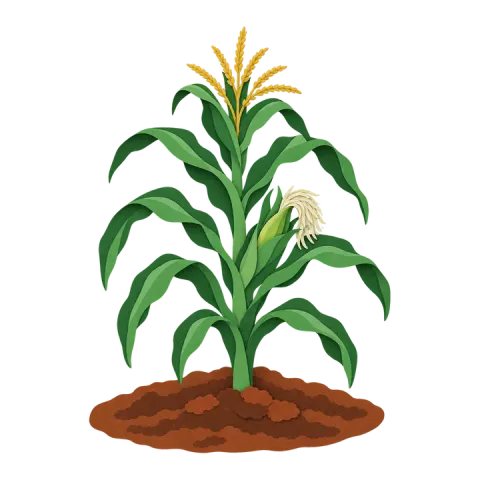
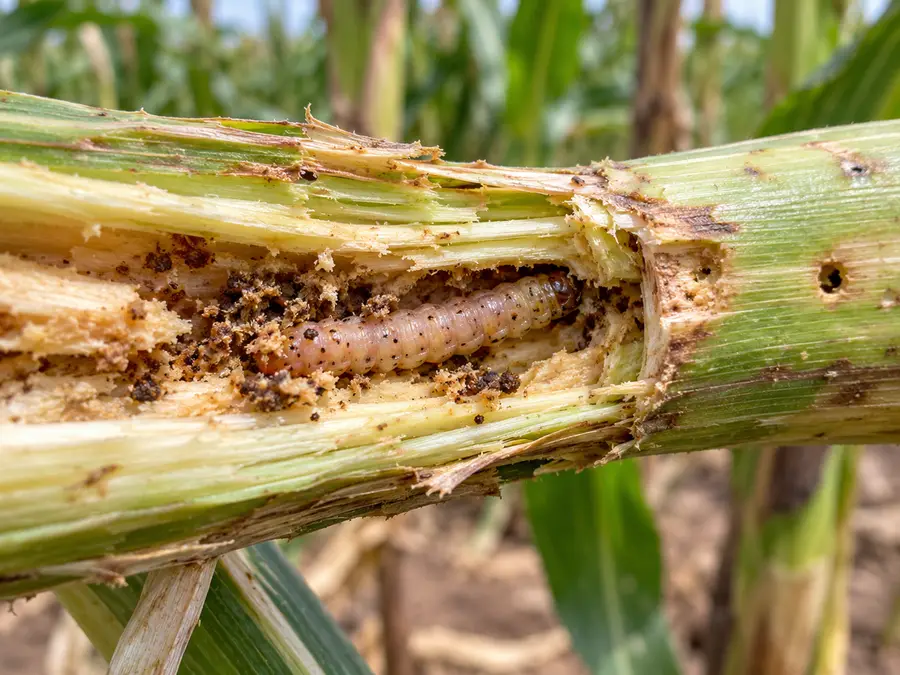
Caterpillars that bore inside the stem, so the centre leaf dies while the rest stays green.
What it looks like
Every field looks a little different. If you are not sure, ask in the app’s Farmers, or ask an agronomist.
When it comes
| Crop | Stage | Check |
|---|---|---|
| Maize | Vegetative growth | Scout twice weekly |
| Rice | Establishment | Scout twice weekly |
| Rice | Vegetative growth | Scout twice weekly |
| Rice | Flowering | Scout daily at heading |
What to look for
Twice a week, look in the centre of each plant where the new leaves come out. If you see chewed leaves and tiny black droppings, that's Fall Armyworm. Pull a few plants apart at the bottom — if the middle leaf is wilting and brown while others are green, that's a stem-eating worm inside. Check under leaves for tiny green or black bugs in big groups (aphids).
Twice a week, check the rice. If the centre leaf of a plant is rolled into a tube like an onion, that's gall midge. Also walk the edges — rats can chew through whole patches in a single night.
Look at the leaves twice a week. Grey or white pointy spots = rice blast (a serious disease — treat right away). Yellow patches with dying plants = planthoppers (treat fast). Wilted central leaves = stem-eating worms inside.
Check at sunrise every day when the rice flowers come out. Rice bugs feed on the soft grains and leave behind empty husks. If you see a brown ring at the bottom of the flower head, that's neck blast — treat right away.
What to do
Managed similarly to Fall Armyworm.
Also watch for
General advice from crop guides for Ghana. Before you spray, ask your agro-input dealer for a product registered for this pest, read the label, and wear gloves. For a serious attack, call your district agriculture office or an agronomist.
Catch it early
AsaaseYaa reminds you when to check your crop for pests, and shows you what to look for. Free.