 AsaaseYaa
Whiteflies
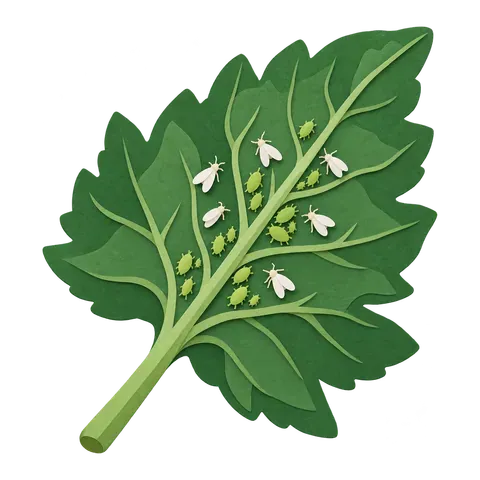
Tiny white flying insects under the leaves. They suck sap and spread virus diseases.
What it looks like
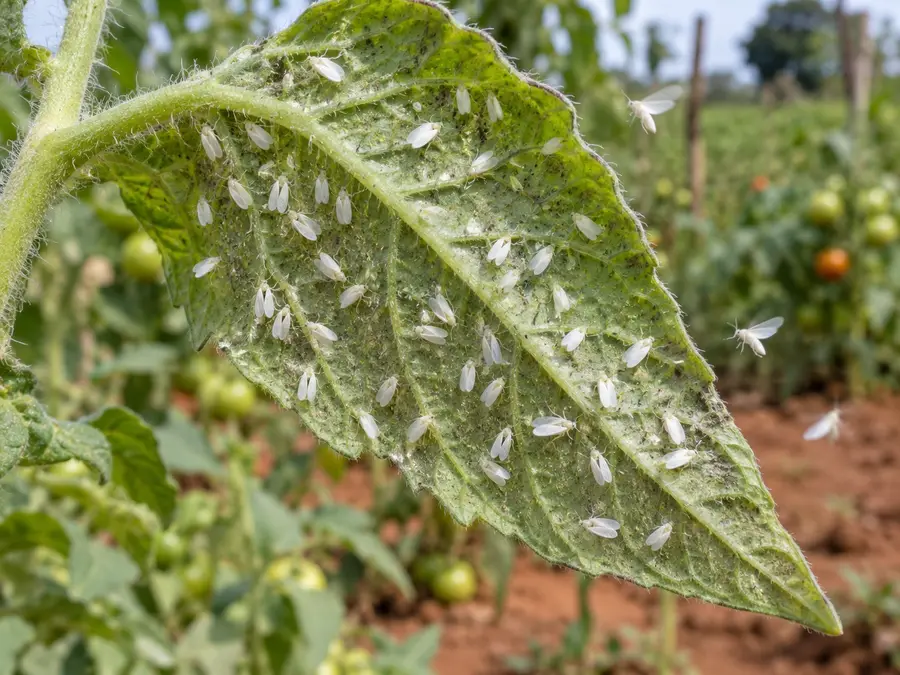
Every field looks a little different. If you are not sure, ask in the app’s Farmers, or ask an agronomist.
When it comes
| Crop | Stage | Check |
|---|---|---|
| Cassava | Vegetative growth | Scout twice monthly |
| Tomato | Establishment | Scout daily for first 2 weeks |
| Tomato | Vegetative growth | Scout twice weekly |
| Tomato | Flowering | Scout twice weekly |
| Pepper | Vegetative growth | Scout twice weekly |
| Okra | Vegetative growth | Scout twice weekly |
| Okra | Flowering | Scout twice weekly |
| Okra | Fruiting | Scout every 3 days |
What to look for
Twice a month, check the tips of new shoots. White cottony patches on the stems mean mealybug — wash off with soapy water or treat. Tiny white flies that fly up when you shake the plant carry the mosaic virus from plant to plant — control them quickly. Pull up and burn any plants showing yellow patches.
Check the seedlings every day for the first 2 weeks. Plants cut off at the base = cutworms come out at night. Plants wilting at soil level = a soil disease (damping-off) — pull and burn them. Tiny white flies under the leaves carry a bad virus that yellows and curls leaves; treat fast.
Twice a week, turn over leaves and look underneath. Tiny white flies or green/black bugs in groups = aphids/whitefly. Fine spider-web on the leaves and silver-bronze leaf colour = spider mites (worse in dry weather). Curly white winding lines on leaves = leaf miners eating inside.
Tiny insects in the flowers cause them to curl and twist — that's thrips, and they also carry a virus. If lots of flowers fall off but you don't see bugs, the heat or your watering is the problem — not pests.
Twice a week, look under the leaves. Tiny insects in groups = aphids or whitefly. Silvery scars on leaves = thrips. Webbing or bronze leaves (worse in dry weather) = spider mites. White flies are the dangerous ones — they spread a yellow-vein virus.
Twice a week, look at the leaves. Many small holes = flea beetles. Bugs in groups under leaves = aphids. Tiny white flies that fly up when you touch the plant are the dangerous ones — they spread the leaf-curl virus. Reflective mulch and neem help.
When flowers appear, keep checking twice a week. Whiteflies and aphids spread virus and weaken the plant. Reflective mulch under the plants confuses the flies; neem and soapy sprays knock them back.
Every 3 days while picking, check the leaves and new pods. Curled, distorted young leaves = the leaf-curl virus spread by whiteflies — pull badly affected plants out. Keep flea beetles and aphids in check with neem.
What to do
Manage with reflective mulches, soapy-water sprays, or botanical/synthetic insecticides.
Sap-sucking insects
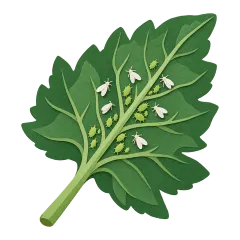
Whiteflies and aphids suck the sap and spread plant diseases.
- Spray water hard under the leaves to knock them off.
- Remove leaves that are badly covered and take them away from the field.
- If they come back, spray a neem mix or soapy water under the leaves in the cool morning.
Don’t: Do not spray in full sun — it burns the leaves.
Also watch for
General advice from crop guides for Ghana. Before you spray, ask your agro-input dealer for a product registered for this pest, read the label, and wear gloves. For a serious attack, call your district agriculture office or an agronomist.
Catch it early
AsaaseYaa reminds you when to check your crop for pests, and shows you what to look for. Free.